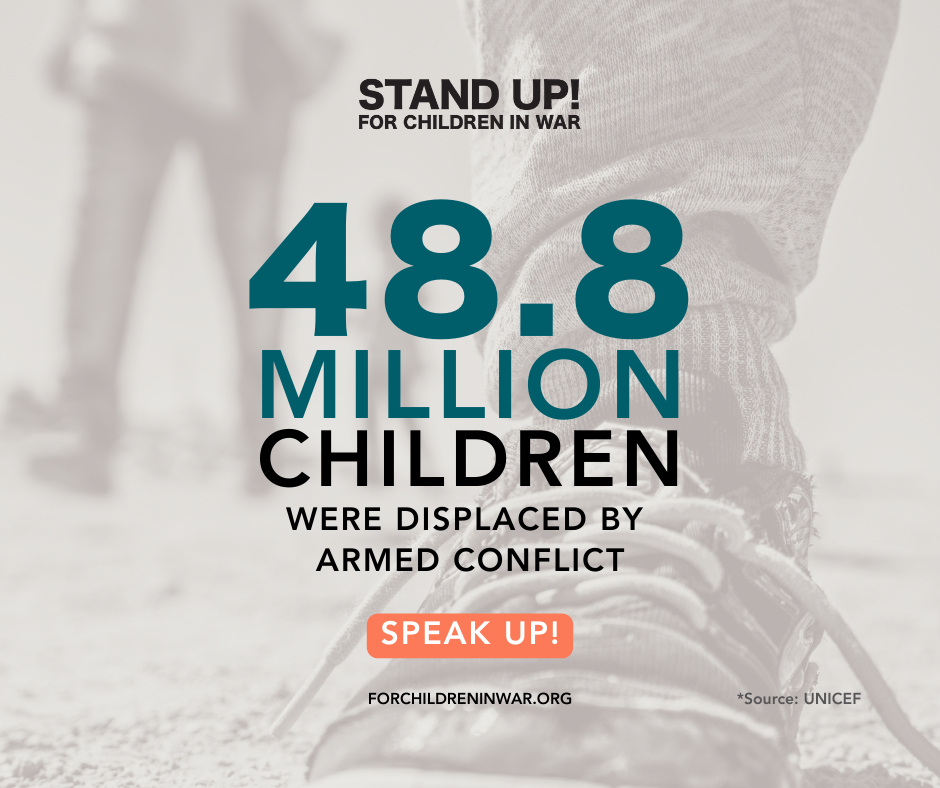

Welcome to your essential toolkit to Stand Up for Children in War, raise awareness, and inspire action.
This package is designed to equip you, your community, and your networks with the facts, messages, and resources necessary to make your voice heard. Whether you are a member of a faith community, an educator, a parent, a youth, or just someone Standing Up for Children in War, this toolkit offers practical and meaningful ways for you to contribute to this collective call for peace.
Use these resources to amplify children’s voices, advocate for their protection, and unite in a powerful mobilization of spiritual solidarity.
For more ideas on what you can do, visit our section Engagement Options.
The advanced edited version of the most recent report of the UN High Commissioner for Human Rights examines the severe impact of armed conflicts on children’s human rights, identifies the barriers to the effective implementation of legal frameworks to protect them, and offers recommendations to address these violations.
“Before the war, we dreamed of becoming doctors, teachers, and engineers. Now our only dream is to live for tomorrow. We do not know if the future will even exist for us.”
Child's testimony captured in the Report of the UN High Commissioner for Human Rights
The Office of the High Commissioner for Human Rights has also prepared a child-friendly version for its wide dissemination among young audiences.
Conversations about war and peace can feel overwhelming, for adults and children alike. However, when held with care, these conversations can nurture empathy, resilience, and hope. The following guidance is meant to support adults in creating safe and meaningful spaces where children can express themselves during the proposed activities.
Talking about war and conflict with children is not easy. News and images of violence can cause fear, sadness, and confusion. Children often turn to parents, caregivers, teachers, and trusted adults for guidance, comfort, and honest answers.
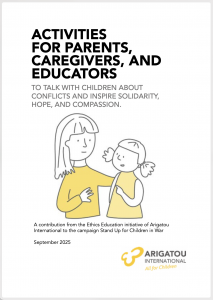
Simple activities that parents, caregivers, and educators can use to explore topics like conflict, war, and peace with children as young as three. These activities have been adapted for different age groups and can be easily customized.
Religious and spiritual leaders hold a position of deep trust and influence within their communities. Their words have the power to shape values, guide behavior, and inspire hope. These two resources offer carefully prepared suggestions for introducing the sensitive topics of conflict and peace into sermons and ceremonies.
Writing a letter to a government official or a UN representative in your country is a powerful way to make your voice heard and demand action to protect children in war. Here are some guidelines and templates of letters to help you share your opinions and demands with decision-makers.
Paper
This study explores how trauma from war can be passed down through generations. the first report of an intergenerational epigenetic signature of violence, which has important implications for understanding the inheritance of trauma.
Early Childhood Peace Consortium
Guidelines
When conflict or war makes the headlines, it can cause feelings such as fear, sadness, anger and anxiety wherever you live. Here are 8 tips developed by UNICEF to support and comfort children.
UNICEF
Guidelines
The “Faith for Rights” framework provides space for a cross-disciplinary reflection and action on the connections between religions, beliefs and human rights to empower faith actors to contribute to fostering peaceful societies.
Office of the UN High Commissioner for Human Rights
Paper
This article examines how the Beirut Declaration and its 18 Commitments on ‘Faith for Rights’ have been implemented in practice since 2017. It focuses on case studies from Afghanistan, Cyprus, the Democratic Republic of the Congo.
Journal of Human Rights Practice
Book
This open access publication brings together chapters written by experts who have been involved in elaborating the 2016 Declaration on the Right to Peace or in shaping freedom of conscientious objection to military service since the 1980s.
University for Peace
Toolkit
Fossil fuels are a key driver of the climate crisis, harming present and future generations. This new publication from the World Council of Churches' Churches' Commitments to Children program provides a legal toolkit for people of faith to hold fossil fuel financiers accountable. It is a powerful call to action to protect children and our planet.
World Council of Churches
Guide
New fossil fuel investments threaten children and future generations. Ending new investments in them is one of the most effective ways to accelerate climate solutions and save lives. This document provides guidelines for individuals and organizations to stop investing in fossil fuels.
World Council of Churches
Video
This video documents the harrowing experiences of children and their families in Gaza as they face the daily struggles of war. It shows their displacement, the loss of loved ones, and the injuries they've sustained. The video also highlights the profound psychological and physical toll of the conflict on these children.
Defense for Children Palestine
Guidelines
A guide to help people of faith and their partners take legal action against financial institutions that fund fossil fuels. Developed by the Churches’ Commitments to Children program, this publication provides a range of strategies to hold these institutions accountable.
Word Council of Churches
Guidelines
The “Faith for Rights” framework provides space for a cross-disciplinary reflection and action on the connections between religions, beliefs and human rights to empower faith actors to contribute to fostering peaceful societies.
Office of the UN High Commissioner for Human Rights
Paper
This article examines how the Beirut Declaration and its 18 Commitments on ‘Faith for Rights’ have been implemented in practice since 2017. It focuses on case studies from Afghanistan, Cyprus, the Democratic Republic of the Congo.
Journal of Human Rights Practice